Can a tow truck refuse to take my car in Florida?
On a tow you arrange yourself, a Florida operator can decline the job. Police, insurance-contract, and Orange County trespass or nonconsensual work sit under different rules. This page keeps those lanes separate.
What you'll learn
- When a private, consensual request can be declined
- When police, an insurer, or a property contract can change the duty
- What Florida Statute 715.07 covers (private-property removal) versus a tow you called
- What Orange County Chapter 35, Division III covers (trespass, nonconsensual, immobilization) and what Sec. 35-55 exempts
- What to do next if you are stranded
Step by step
- Reason 1 - Vehicle weight or size exceeds the truck rating (e.g., wheel-lift truck for a loaded box truck).
- Reason 2 - Vehicle is unsafe to tow (hazardous fluid leak, fire risk, structural collapse).
- Reason 3 - Driver cannot verify ownership (no registration, suspected stolen vehicle).
- Reason 4 - Location is unsafe for the operator (active hostile environment, no safe pull-off).
- Reason 5 - Operator does not service that area or that vehicle type (e.g., EV refusal from a non-flatbed-equipped operator).
- When an operator is expected to take it: police-directed scenes, and your own insurance or motor club dispatch on the operator they sent.
If a tow operator declines your call and you are stranded in an unsafe spot, call 911, or dial *347 for FHP Road Rangers on covered Florida highways. FDOT describes limited no-cost help such as a flat change, a jump, emergency fuel, minor repairs, or moving a disabled vehicle out of a travel lane. What they can do depends on the route. They are not a substitute for a private destination tow.
The short answer
If you called for the tow yourself, that is a consensual private job. The operator can decline for equipment, safety, area, identity, or capacity. There is no general Orange County duty that forces every company to take every private request. Quick Tow Orlando is a referral line. It can try another operator. It cannot order a truck to roll.
Different rules apply when law enforcement directs a scene, when your insurer or motor club dispatched a named operator under a contract, or when the vehicle is being removed without your consent from private property. Do not mix those duties into an ordinary service call.
Reasons a private operator may decline a consensual request
- The vehicle exceeds the truck's rating. A light-duty wheel-lift is the wrong truck for a loaded box truck or bus. They should say so and, if they can, point you to heavy-duty equipment.
- The vehicle is unsafe to move with the gear they have. Active fuel leak, structural collapse, fire risk, hazardous cargo.
- They cannot confirm you have authority to move the vehicle. No license, no registration, a possible stolen-vehicle flag.
- The location is unsafe for the operator. Hostile scene, no pull-off, unstable shoulder, a perimeter they cannot enter.
- They do not cover that area or that vehicle type with the truck they have. An operator without a way to keep all four EV tires off the ground can decline rather than drag drive motors. That is a capacity limit, not a county staffing duty.
When a different duty can apply
- Police-directed scenes. Follow what the officer on scene tells you. That is not the same as a call you placed to a referral line.
- Your insurer or motor club dispatched a named operator. That operator's duty, if any, is to the club contract. Refusal is a contract issue with that club, not a Chapter 35 private-request duty.
- A property-management contract. An HOA or apartment contract can require the contracted operator to answer property calls. That contract does not convert every public phone call into a must-take job.
- Trespass and nonconsensual tows under Orange County Chapter 35, Division III. That article regulates removing a vehicle without owner consent, plus immobilization. Section 35-55 exempts towing done with the consent of the vehicle owner or operator. Phone-staffing, Sheriff-arrival notice, insurance filing, and related duties in that Division attach to the work the article covers. They do not import a 24/7 take-every-call rule onto a consensual roadside request.
Florida and Orange County rules, kept in their lanes
Florida Statute 715.07 - private property towing
Sets state minimums for removing an unauthorized vehicle from private property: posted notice, company name and phone, and notice to local police after the tow. It hands rate-setting to counties and cities. If you return while the vehicle is being hooked but before the tow is complete, the operator's half-rate drop rule in that statute is about that nonconsensual hook, not about a job you scheduled.
Florida Statute 713.78 - liens on unclaimed vehicles
Governs what happens if nobody claims a stored vehicle, including certified notice and the waiting periods the statute sets by vehicle age. That is storage and lien process, not a reason an operator must accept your private dispatch.
Orange County Code Chapter 35, Division III
The county trespass, nonconsensual, and immobilization article, including amendments such as Ordinance 2023-10 (effective April 1, 2023). Read it for rate caps, release timing, inspection of personal property, and operator credentials when the county is regulating that nonconsensual work. Section 35-55 exempts owner- or operator-consent towing from the article. Do not treat Division III as the rulebook for a tow you arranged by phone.
Tow truck driver licensing
Florida has no single statewide towing license. A CDL is required to operate a tow truck rated 26,001 pounds or more; lighter trucks can run on a standard Class E license. Local ordinances cover the rest for the work they actually regulate.
Your rights as the vehicle owner
- Right to know who has your vehicle after a nonconsensual or trespass tow. If you cannot reach the number on a tow-away sign, the Orange County Sheriff's Office non-emergency line, (407) 836-4357, can confirm whether the vehicle was towed and which company has it.
- Rights that attach to Orange County Chapter 35, Division III work (trespass, nonconsensual, immobilization), such as inspection of personal property and the release rules in that article. Those are not automatic extras on a consensual private dispatch. Ask the operator what their own process is for a job you arranged.
- Right to a written price before a truck rolls on a job you arranged. Get the total, the method, and the destination in the same conversation.
- Right to insist the method matches the owner's manual. You can decline a method that would roll drive wheels against the book.
What to do if nobody takes the private call
- Document the decline. Company name, truck plate if you have it, time, and the reason they gave.
- Call another operator, or call this referral line again. Quick Tow Orlando can try a different operator. It does not guarantee a truck.
- If you are stranded somewhere unsafe, call 911. Or dial *347 from a cell phone for FHP Road Rangers on covered highways. FDOT describes limited help (flat, jump, fuel, minor repair, clearing a travel lane). You may still need a private tow to a shop or home.
- File a complaint with Orange County Consumer Protection if the problem is a predatory trespass or nonconsensual bill: (407) 836-3111. That unit is not a dispatcher for a declined consensual request.
Orlando-metro patterns worth knowing
- Rental-car and tourist refusals. A driver in an out-of-state or rental vehicle near MCO or the theme parks sometimes gets refused because the operator can't verify the rental paperwork on the spot. Pull up the rental agreement on your phone before you call - it usually resolves this fast.
- EV equipment limits. An operator who cannot keep all four tires off the ground should decline rather than drag an EV. That can be the correct call. Ask them to describe the equipment, then call another operator or this referral line.
- Heavy-duty cascades on I-4. A box truck or bus breaks down and a wheel-lift operator arrives, then refuses. Correct - they shouldn't tow what they can't handle - but they should refer you to a heavy-duty operator rather than just leaving.
- Hurricane-season demand spikes. During an active storm or the days right after, every operator in the metro gets slammed at once, and "we can't get to you for hours" is often true capacity, not bad faith. Call early if you're evacuating and your vehicle already has trouble.
When a call gets turned down (and why)
An operator may decline a job when: (1) the vehicle has an active fuel leak another operator on scene is already addressing; (2) the location sits inside an active police perimeter and they cannot get in; (3) the caller cannot produce ID or registration and the vehicle looks like a possible recovered-stolen situation; or (4) the vehicle is over that truck's gross weight rating. A decline should come with a clear reason and, if they can, a pointer to other equipment. Quick Tow Orlando cannot guarantee a replacement truck.
Filing a complaint - useful contacts
- Orange County Consumer Protection - (407) 836-3111, for predatory towing and billing complaints.
- Orange County Sheriff's Office, non-emergency - (407) 836-4357, to confirm whether and where your vehicle was towed.
- Florida Highway Patrol Road Rangers - dial *347 from any cell phone on covered highways for the limited roadside help FDOT lists for that program.
- FL511 - Florida's official real-time traffic and incident information service.
Rather have a pro handle it?
Towing and roadside service across Orlando Metro. One local number, open any hour.
Keep learning.
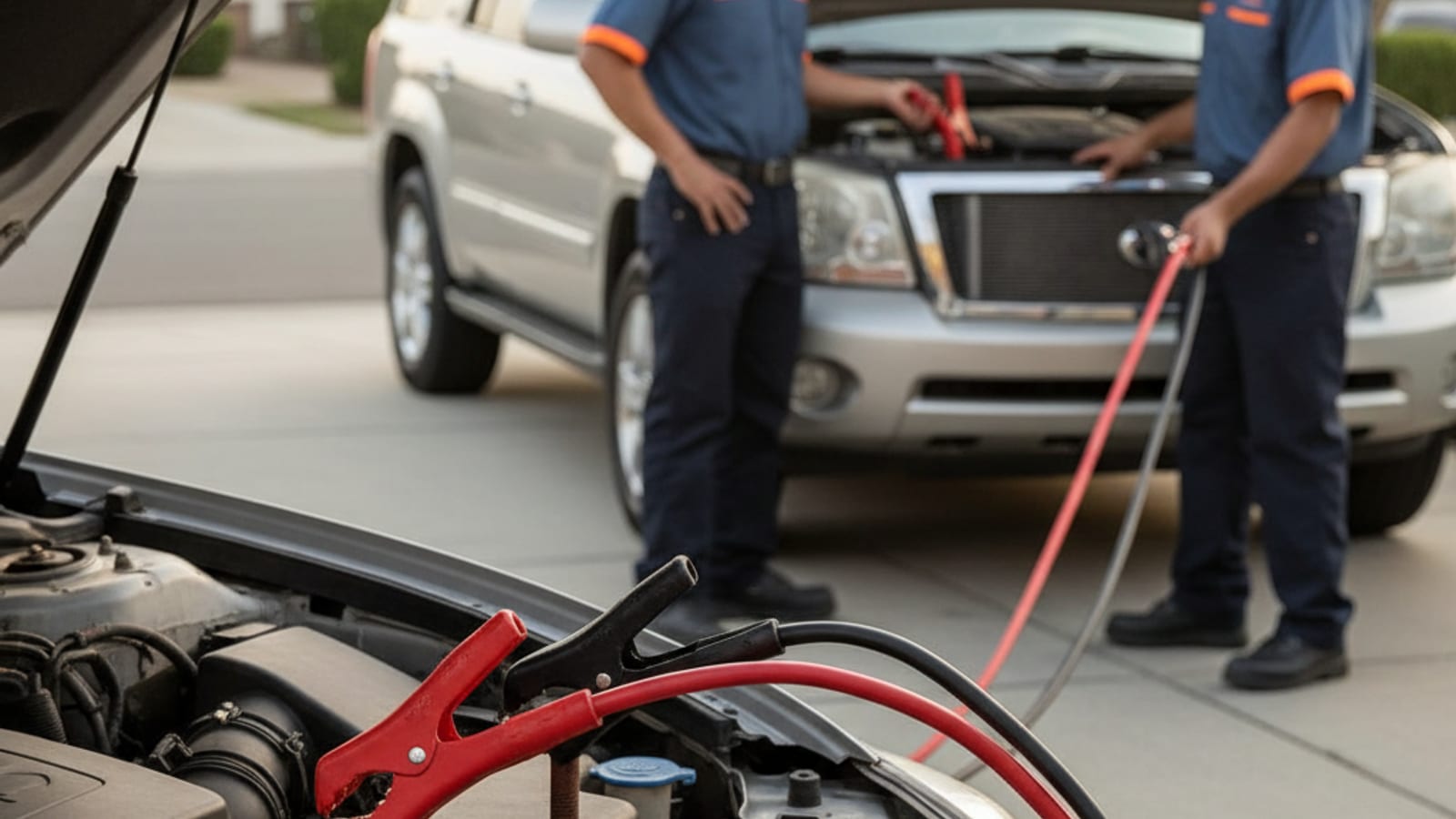
Jump-start a dead battery safely
Jumper cables are simple until you hook them wrong. Do it right and you'll avoid sparks, ruined electronics, and a tow you didn't need.
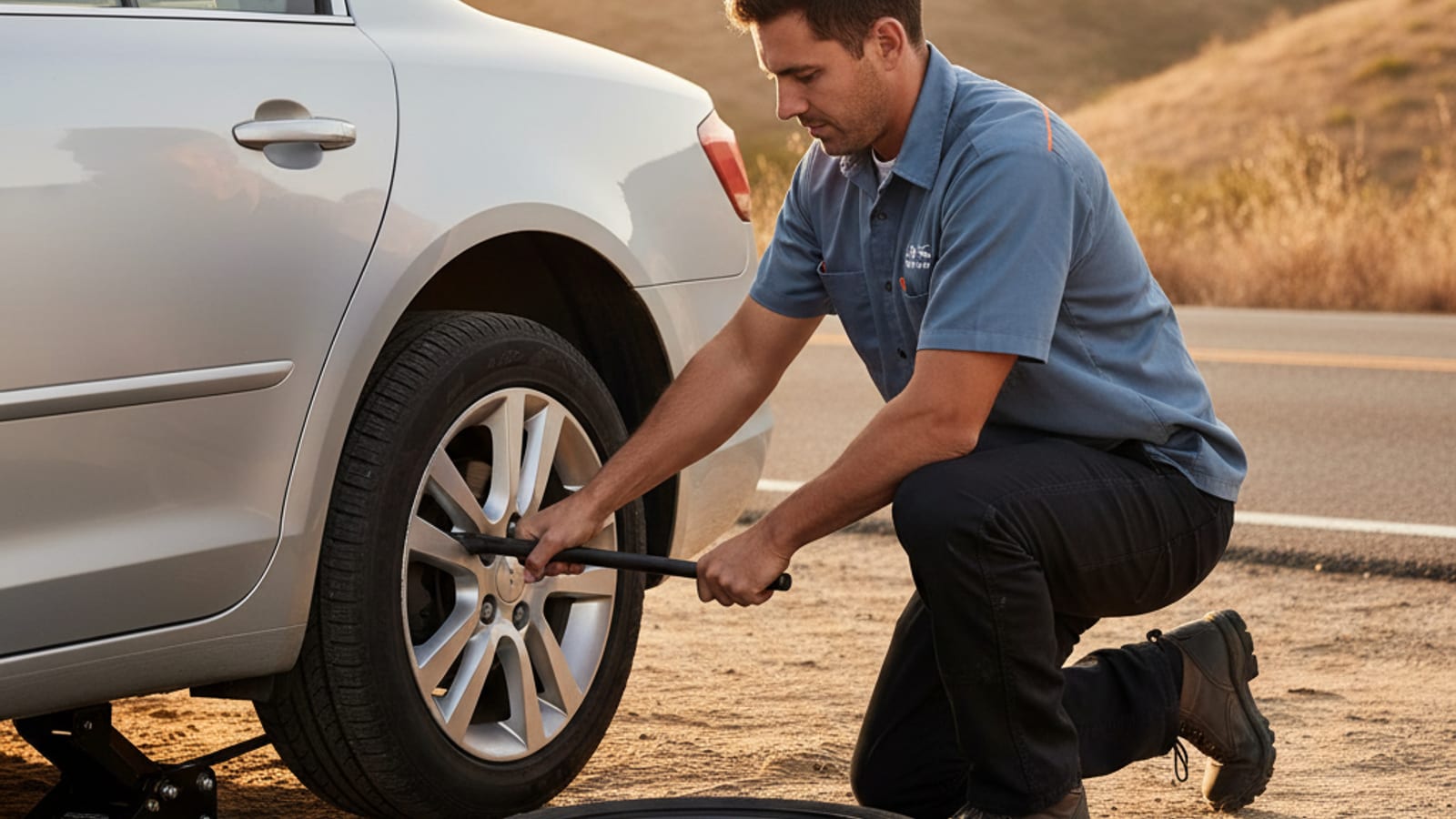
Change a flat tire on the side of the road
The difference between a 20-minute shoulder stop and an hour on the phone with a tow company is knowing where the spare and jack live before you need them.
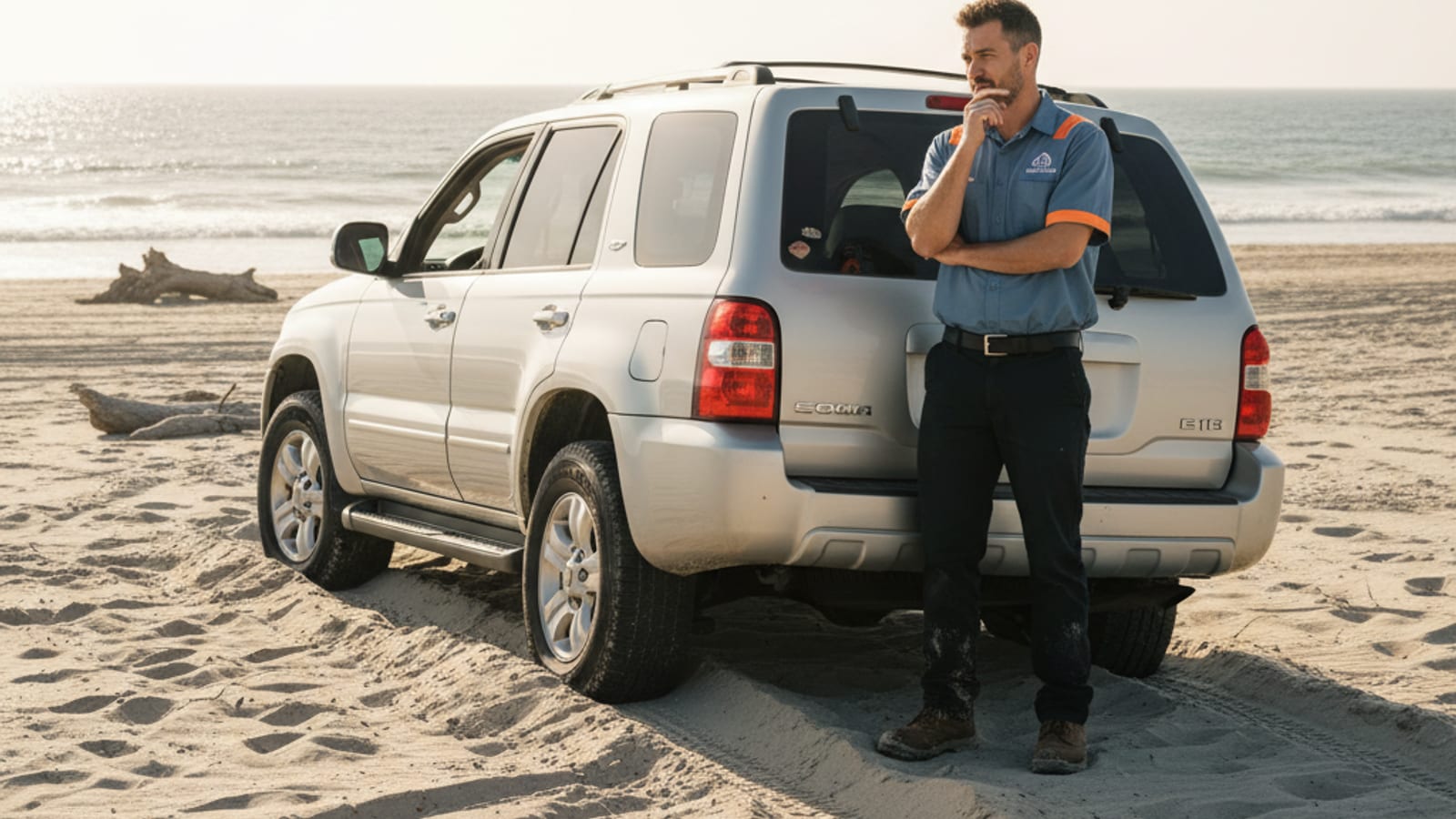
What to do when your car is stuck in mud or standing water
Flooded intersections and soft shoulders on new West Orange County roads swallow cars every rainy season. The first thing to do is stop making it worse.