What to do when your car is stuck in mud or standing water
Flooded intersections and soft shoulders on new West Orange County roads swallow cars every rainy season. The first thing to do is stop making it worse.
What you'll learn
- Why spinning the wheels digs you in deeper, fast
- Why you should never try to restart a car that stalled in standing water
- How traction mats work and when to use them
- When to stop trying and call a winch-out
Step by step
- Stop spinning the wheels immediately. Every few seconds of spin sinks you further.
- Check that no one is hurt and the vehicle is not unstable before doing anything else.
- If the car stalled in standing water, do not try to restart it. Cranking a flooded engine can cause catastrophic damage.
- If it is safe to do so, clear mud away from the front and back of each drive wheel.
- Slide traction mats, cardboard, or floor mats under the drive wheels for a soft-shoulder or mud situation.
- If it does not move after 2 careful tries, stop. Call for a winch-out.
If water is moving or rising, get occupants out if it is safe to do so and call 911. Do not wait for a recovery truck while people are still in a flooding vehicle. On still water or mud, Central Florida's flat ground drains slowly, so standing water after a summer storm is often deeper than it looks. Do not restart an engine that stalled in water if you can avoid it; that can hydrolock the motor. If two careful tries do not move the car, stop and call a recovery operator.
Rather have a pro handle it?
Towing and roadside service across Orlando Metro. One local number, open any hour.
Keep learning.
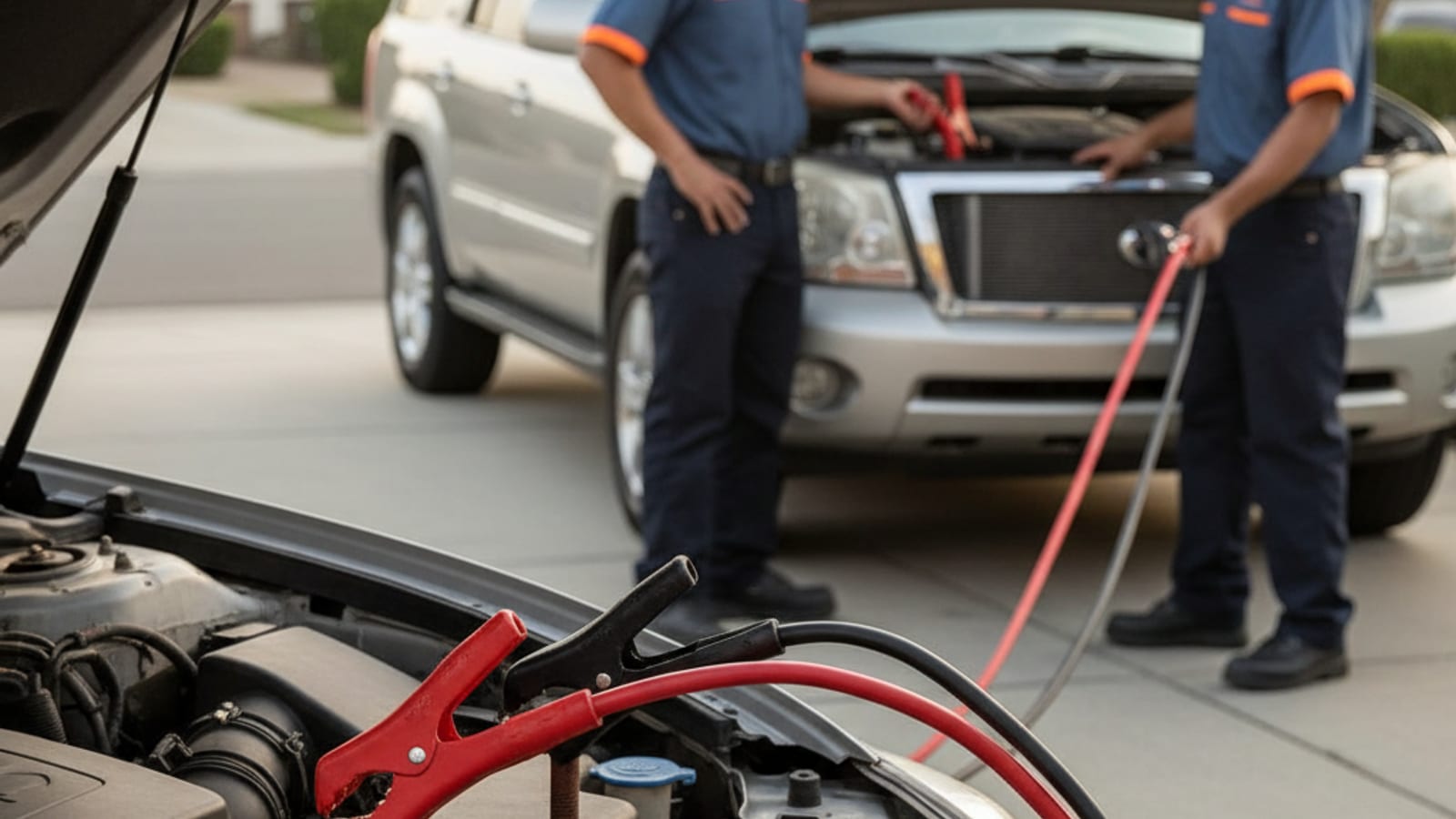
Jump-start a dead battery safely
Jumper cables are simple until you hook them wrong. Do it right and you'll avoid sparks, ruined electronics, and a tow you didn't need.
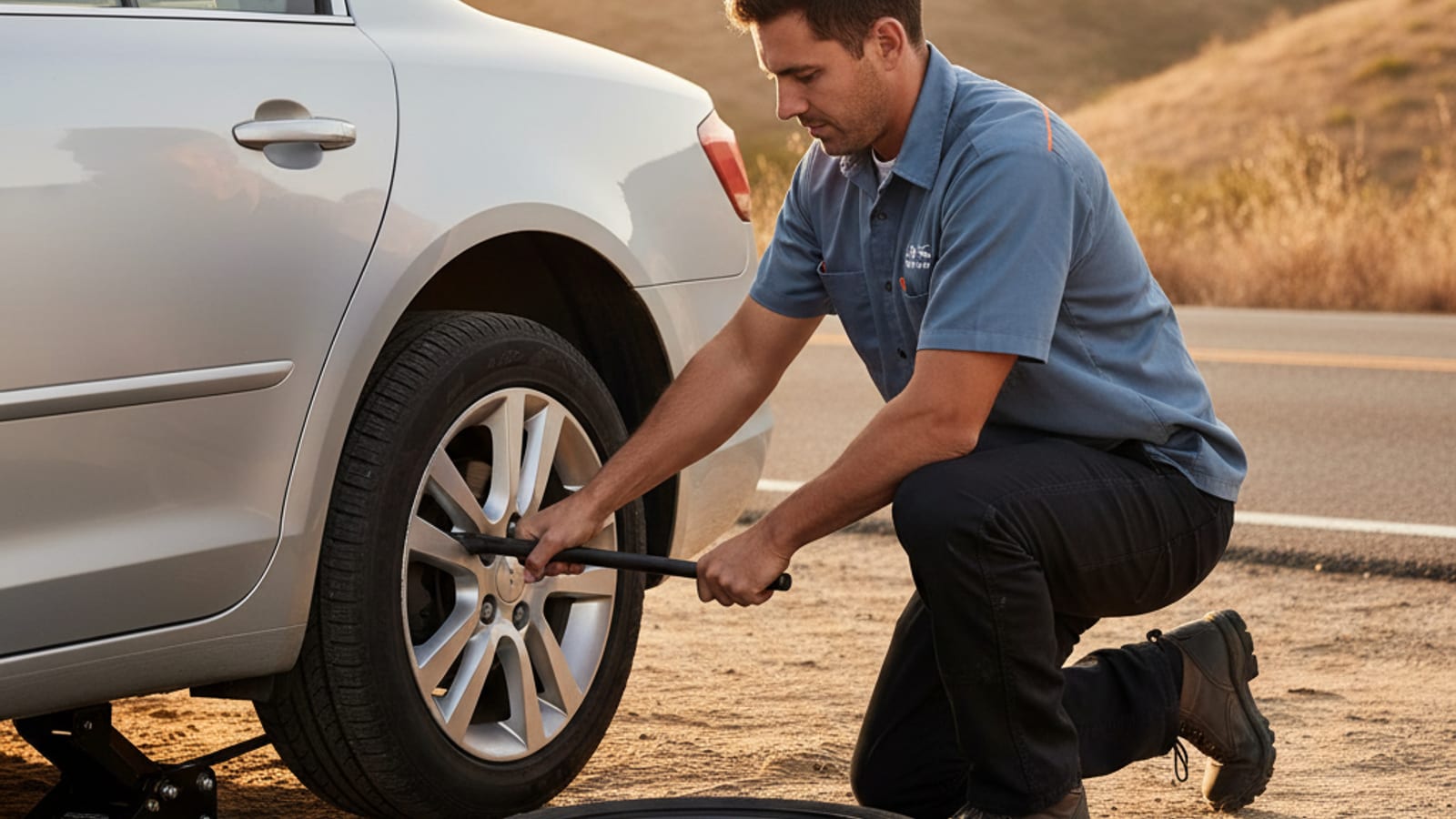
Change a flat tire on the side of the road
The difference between a 20-minute shoulder stop and an hour on the phone with a tow company is knowing where the spare and jack live before you need them.
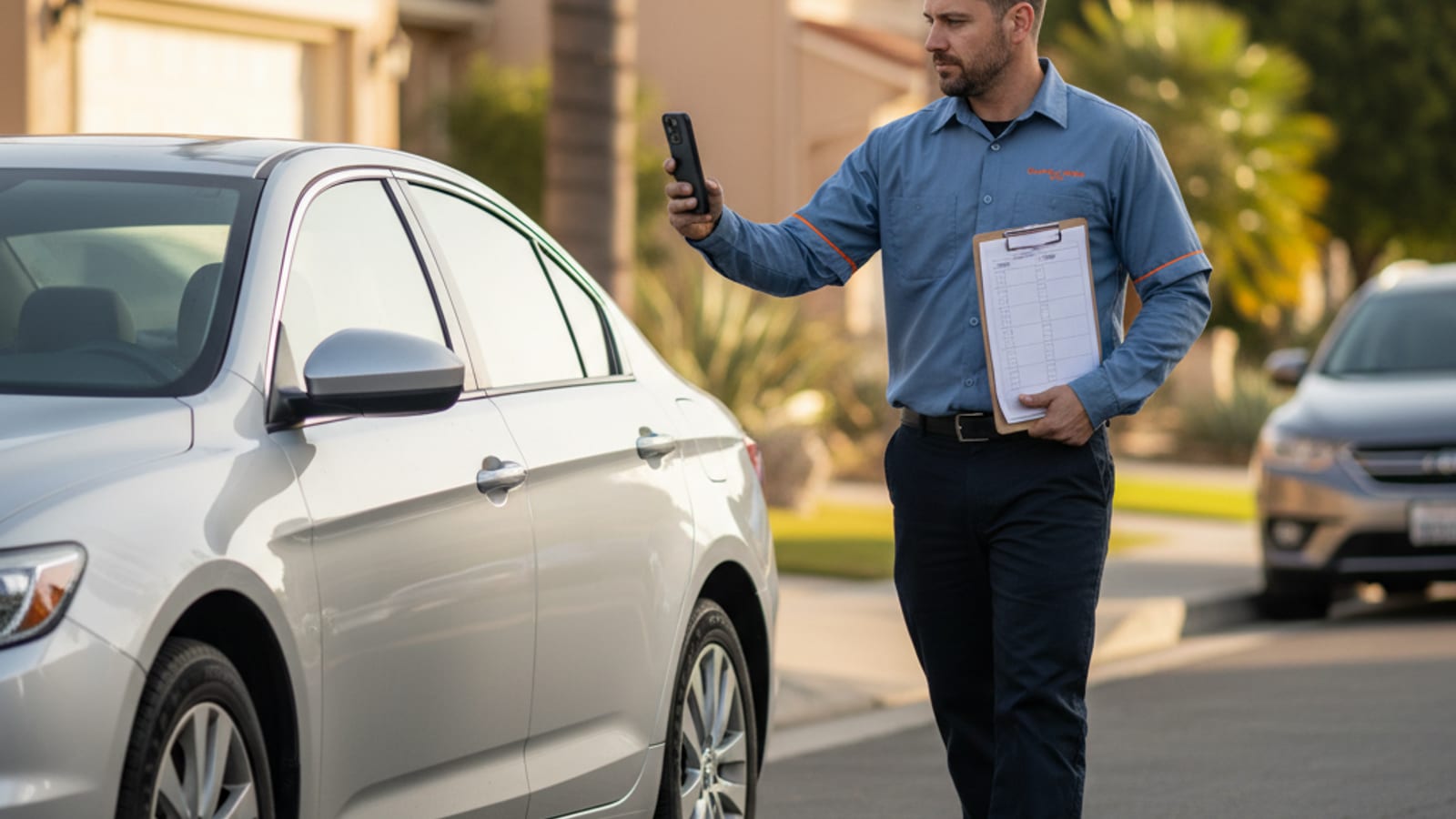
Prepare your vehicle for a tow
A few minutes of prep before the tow truck arrives saves time, avoids damage, and makes the whole call go faster.