Jump-start a dead battery safely
Jumper cables are simple until you hook them wrong. Do it right and you'll avoid sparks, ruined electronics, and a tow you didn't need.
What you'll learn
- The correct red-then-black clamp order (and why it matters)
- Why the last clamp goes on a bare metal point, not the dead battery
- When a jump-pack beats a cable-to-cable jump
- When a second jump may still help, and when a charging problem needs a shop instead of another boost
Step by step
- Pull the donor car close enough for the cables to reach. Both cars OFF.
- Clamp RED to POSITIVE (+) on the dead battery.
- Clamp RED to POSITIVE (+) on the donor battery.
- Clamp BLACK to NEGATIVE (−) on the donor battery.
- Clamp BLACK to bare metal on the dead car's engine block (not the battery).
- Start the donor. Wait 2 minutes. Start the dead car. Let run 10 minutes before driving.
If the car cranks weakly, or it starts and then dies again within about an hour, the battery may be worn out or the charging system may not be keeping up. A second jump can help a deeply discharged battery. It will not repair a charging system that is not working. Florida heat is hard on batteries year-round, so a battery past its third summer is a common thing to have tested. If jumps do not restore a lasting start, arrange a tow to a shop rather than keep guessing on the shoulder.
Rather have a pro handle it?
Towing and roadside service across Orlando Metro. One local number, open any hour.
Keep learning.
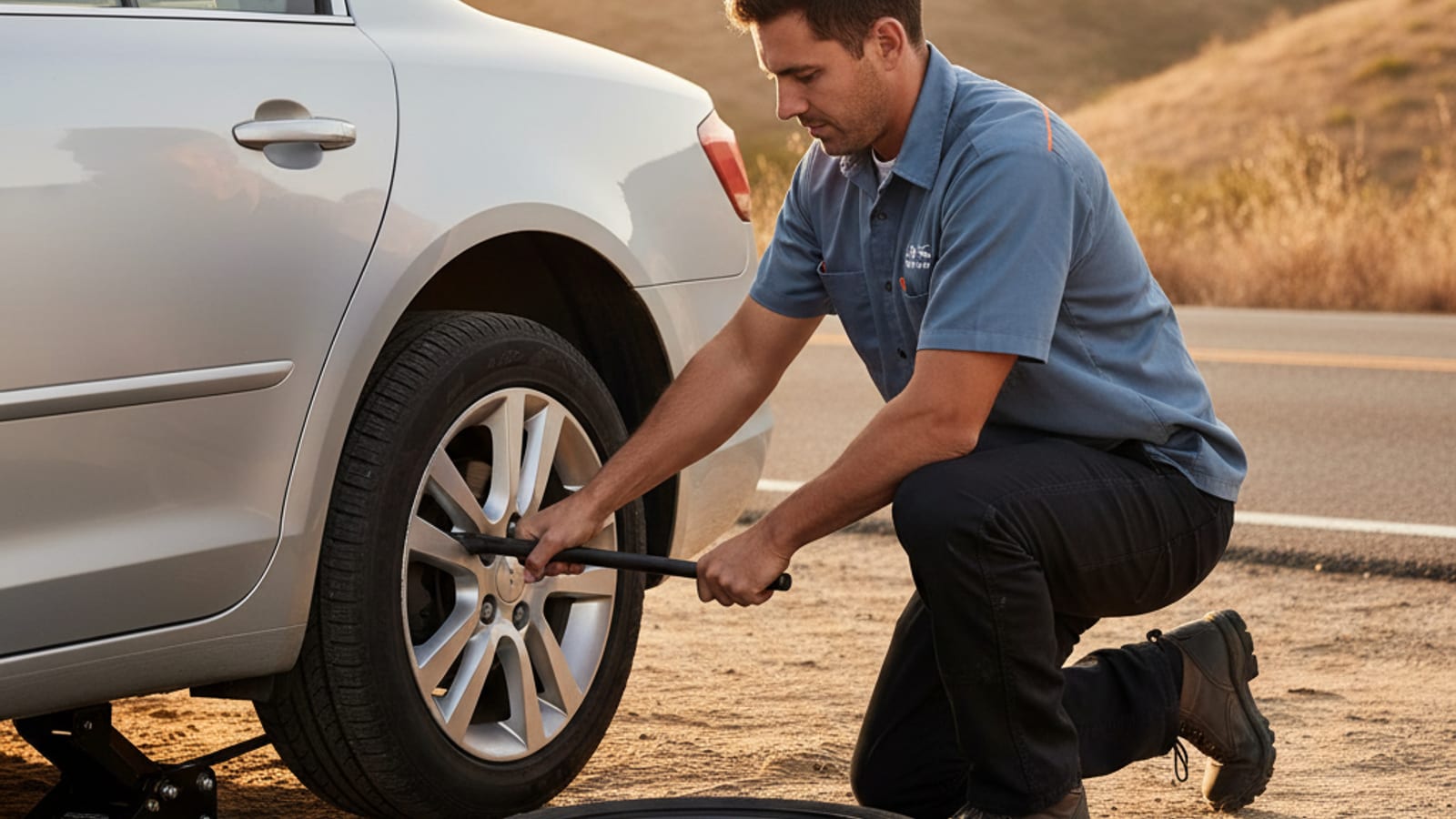
Change a flat tire on the side of the road
The difference between a 20-minute shoulder stop and an hour on the phone with a tow company is knowing where the spare and jack live before you need them.
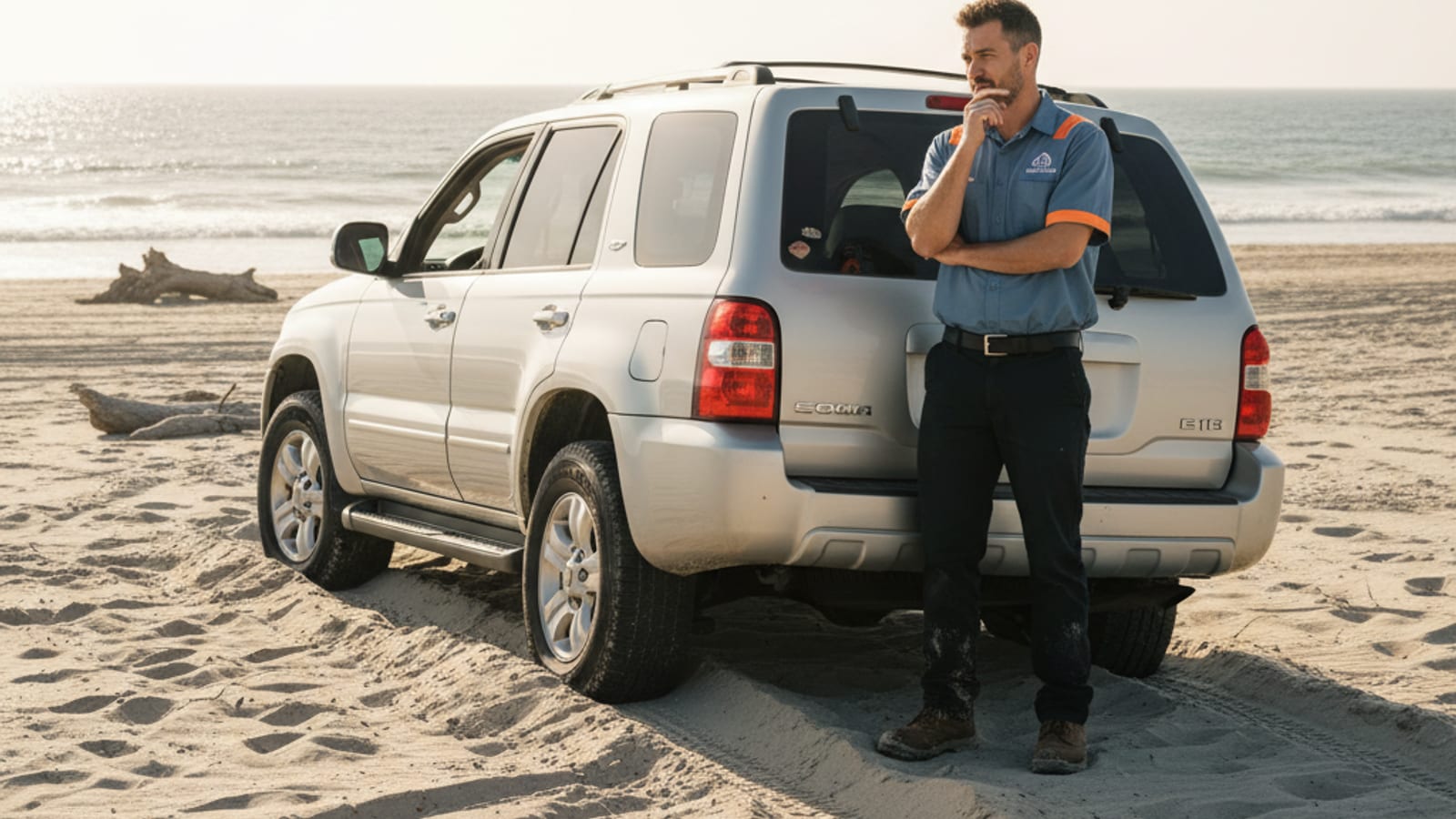
What to do when your car is stuck in mud or standing water
Flooded intersections and soft shoulders on new West Orange County roads swallow cars every rainy season. The first thing to do is stop making it worse.
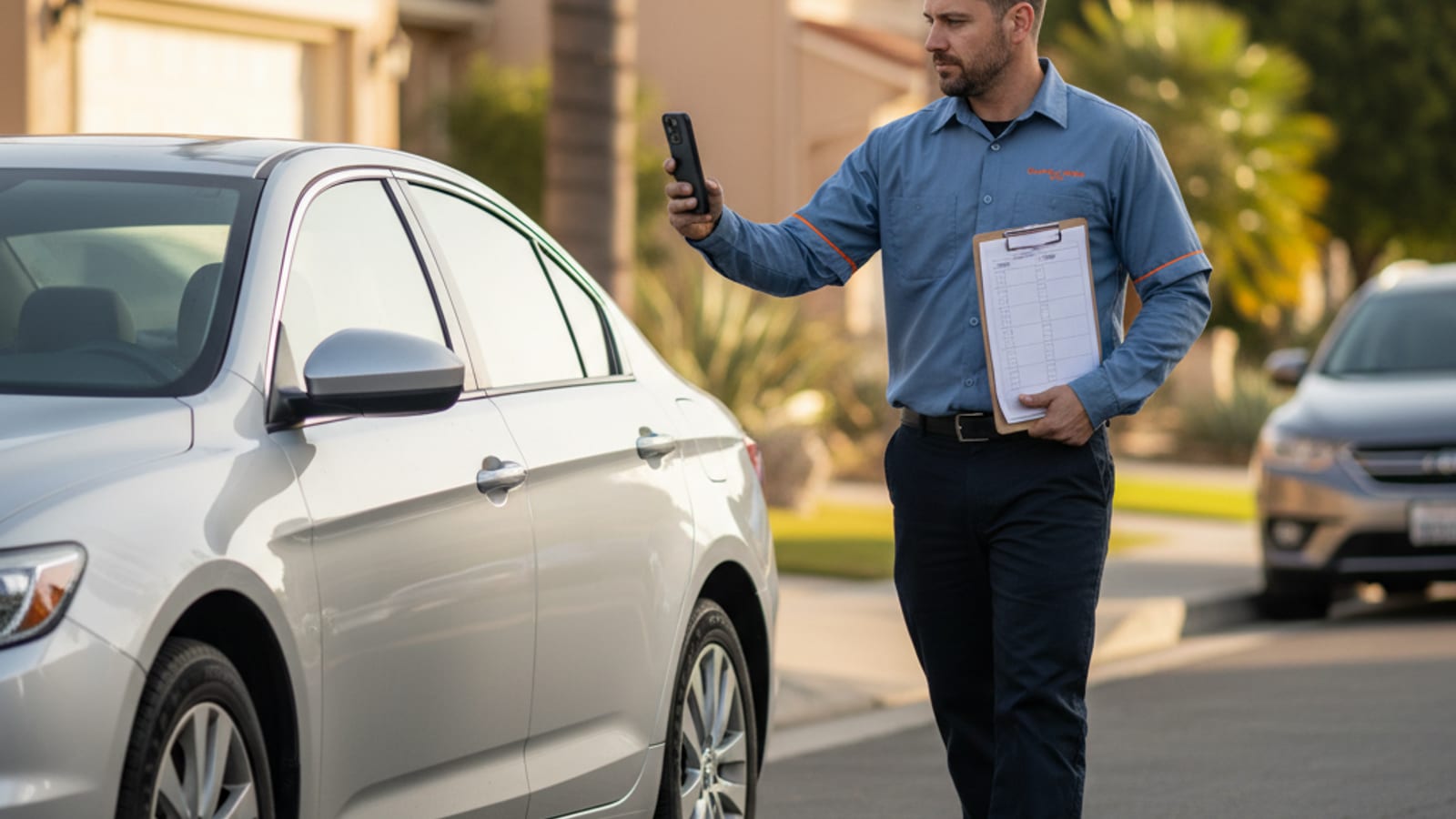
Prepare your vehicle for a tow
A few minutes of prep before the tow truck arrives saves time, avoids damage, and makes the whole call go faster.