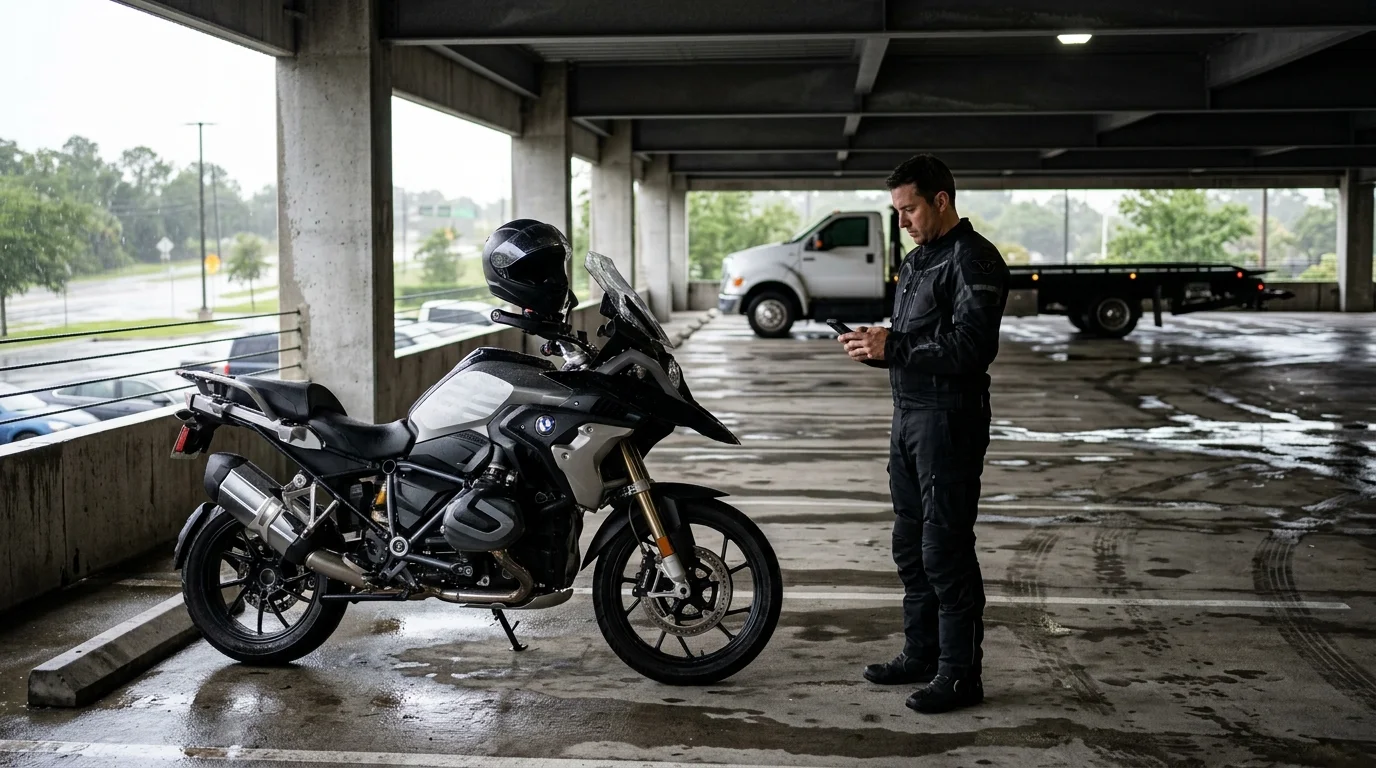
When your motorcycle won’t start after rain in Orlando, get yourself out of traffic first. Don’t keep testing the starter if the bike sat in standing water. Once you’re safe, decide whether roadside help or motorcycle towing fits the situation.
Move the rider and bike away from traffic
Your safety comes before the motorcycle. Step away from moving vehicles before checking the ignition, tires, or controls. If the bike stopped near I-4, SR 408, SR 417, SR 429, or the Turnpike, don’t stand beside an active lane.
Move behind a barrier when you can reach one safely. If you’re on a city street, look for a parking lot or another space outside traffic. Don’t push the motorcycle across moving lanes. A wet bike can also be difficult to control, especially if you’re working alone.
Move the motorcycle only when you can manage its weight and brakes. If it won’t roll, leave it where it is and explain that condition when calling. Don’t force a locked steering system or drag a wheel that won’t turn.
Keep watching the scene around you. Orlando storms can leave low spots filled with water. Don’t walk or ride through standing water to reach a better parking place. Stay away from a downed power line, damaged utility equipment, or anything touching them. Contact emergency services when there’s an injury or an immediate road hazard.
Once you’re safely away from traffic, note your direction of travel and nearest cross street. A passenger can check FL511 live traffic and incident alerts from a safe location. That may help with route planning after a storm.
Use your phone’s map pin if the location is unclear. On International Drive or near a large interchange, include the entrance or ramp you used. Clear location details help the local operator plan the approach without guesswork.
Separate a roadside problem from possible water exposure
A no-start condition is a symptom, not a diagnosis. Rain may be part of the story, but timing alone doesn’t identify the problem. Start by remembering what happened before the motorcycle stopped.
Did the bike shut down while you were riding? Was it parked during the storm and unable to restart afterward? Did it tip over, take a strong splash, or sit where water collected? Share what you observed without assigning a cause.
From a dry, safe position, note what happens during one normal starting attempt. Useful descriptions include:
- The dash stays dark.
- The dash lights appear, but the starter doesn’t turn.
- You hear a click or another brief sound.
- The engine turns but doesn’t start.
- The lights change when you press the starter.
- Nothing changes when you use the controls.
These details are more helpful than saying the battery is dead. Don’t remove body panels, disconnect terminals, open connectors, or attempt roadside electrical work. If you notice a fuel smell, leaking fluid, loose parts, or crash damage, stop testing the motorcycle.
Check both tires without kneeling near traffic. Report a visibly flat tire, damaged wheel, embedded object, or tire that won’t hold its shape. Don’t ride on a tire that appears unsafe. Our guide to flat tire service in Orlando explains how to prepare for roadside help without guessing at the damage.
If the bike wasn’t in standing water and shows no visible crash damage or leak, motorcycle roadside assistance may be a reasonable first request. Describe the symptoms and let the operator decide what can be assessed safely at the scene.
Stop if the bike was in standing water
Stop making start attempts if the motorcycle stood in pooled or moving water. Don’t turn this into a roadside experiment. Arrange transport to a repair location where the bike can be inspected under controlled conditions.
Never enter floodwater to inspect or retrieve the motorcycle. If you’ve already reached dry ground, don’t return just to estimate the depth. Tell the operator that the exact water level is unknown.
When you can observe the bike from a safe place, record only what you can see. A photo may show the motorcycle’s position and any visible water line. Take it from dry ground without stepping into a travel lane. Don’t touch or move the bike when nearby electrical equipment presents a hazard.
Be specific about the exposure. Say whether rain fell on the parked bike, road spray reached it, or standing water surrounded it. If you saw water against part of the motorcycle, describe that level plainly. Don’t guess how long it remained there.
Avoid tipping the motorcycle, removing parts, draining fluids, or trying repeated jump-starts. Don’t ask another rider to test it. Tell the towing operator about the water before equipment is sent so the condition isn’t mistaken for a routine battery call.
The destination matters here. A repair shop is the safer choice when water exposure may require inspection. Call the shop first and confirm that it accepts the motorcycle. If the shop can’t receive it, choose secure storage that you control until an inspection can be arranged.
A motorcycle that starts later may still leave you uncertain about riding it. You don’t need to prove the failure twice. When its condition isn’t clear, transport keeps that decision away from a wet roadside.
Describe the bike’s condition before dispatch
Quick Tow Orlando connects callers with independent towing and roadside operators. Share the bike’s condition and exact location when you call. A clear description helps that operator plan for the motorcycle’s actual condition.
Start with the exact location. Include the road, direction of travel, nearby cross street, and where the bike sits. In a Lake Nona garage, name the entrance and level. Near I-4, identify the exit or ramp without walking toward traffic.
Then describe the motorcycle itself. Share the make, model, and any accessories that change its shape. Mention saddlebags, a top case, a windshield, or loose cargo. Don’t estimate the motorcycle’s weight if you don’t know it.
Explain its current condition in plain terms:
- Whether the bike is upright or on its side
- Whether both wheels can roll
- Whether either tire appears flat or damaged
- Whether the steering is locked
- Whether the key is available
- Whether the bike was in standing water
- Whether it tipped, slid, or was involved in a crash
- Whether you see leaking fluid or loose parts
Don’t force the handlebars just to test the steering. Don’t roll the bike repeatedly to check a damaged tire. Report what you already know and leave further handling to the operator.
The motorcycle towing service page explains how Quick Tow Orlando matches riders with local transport help. The brand doesn’t own tow trucks or perform the loading itself. The independent operator handles the motorcycle at the scene.
Once transport is planned, review what to ask before a motorcycle tow. That guide covers the next conversation, including equipment, access, keys, and the destination handoff.
Choose repair or safe storage as the destination
Pick a destination before requesting transport when possible. This keeps the motorcycle from reaching a closed shop or an address that can’t accept it. It also gives the operator a clear endpoint.
A repair shop makes sense when the motorcycle encountered standing water, shows crash damage, leaks fluid, or remains difficult to assess. Contact the shop directly. Confirm its current hours, whether it accepts unscheduled motorcycles, and how keys should be handled. Those details can change, so don’t rely on an old listing.
If no repair shop has agreed to receive the bike, consider your home, garage, or another secure location you control. Quick Tow Orlando doesn’t operate a storage yard. Don’t assume an independent towing operator or repair business can store the motorcycle without prior confirmation.
Think about access at both ends. Tell the operator about parking-garage height limits, narrow gates, steep driveways, access codes, or restricted entrances. In Winter Park, Sanford, Kissimmee, or Lake Nona, provide the full destination rather than a neighborhood name.
The motorcycle’s condition also affects destination planning. A locked steering system, flat tire, damaged wheel, or loose bodywork should be disclosed before transport. Let the operator choose the loading and securing approach. Don’t attempt to make the bike roll by forcing parts or removing damaged pieces beside the road.
Keep the key and important personal items with you unless the receiving shop gives different instructions. Remove unsecured cargo only when you can do so safely. Don’t stand in traffic to retrieve an item.
If the motorcycle later starts, reassess the original concern before riding. You can still choose transport when water exposure, tire condition, or another visible problem leaves its roadworthiness uncertain.
When to call us
Call when the motorcycle faced standing water, won’t roll, has a damaged tire, or remains unsafe beside traffic. Quick Tow Orlando can match you with an independent local operator for roadside help or motorcycle transport. Call us at (321) 321-9797.