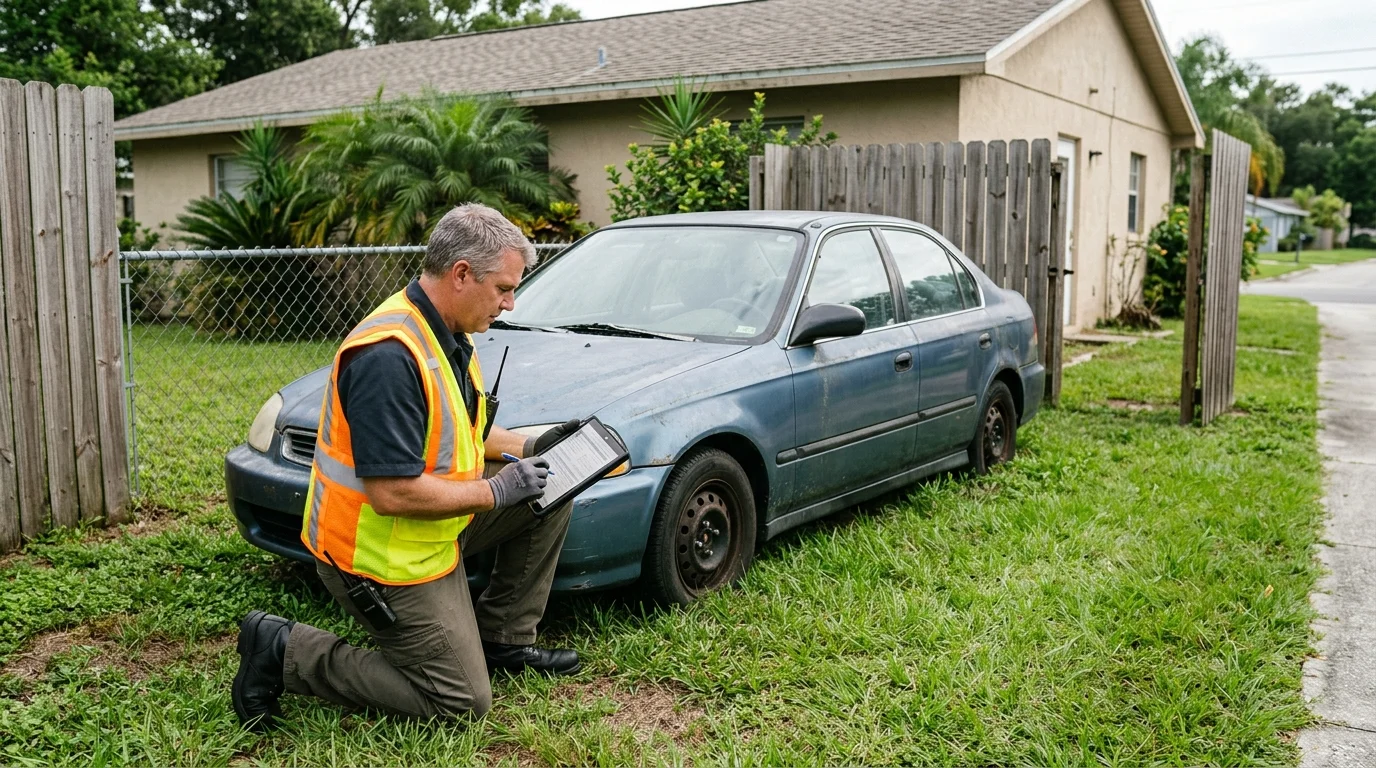
A junk car behind a fence can still be removed without driveway access. The operator first needs clear photos, ownership details, and an accurate view of the route. Tight gates, soft ground, locked wheels, and overhead obstacles will shape the removal plan.
The best first step isn’t pulling the car toward the street. It’s documenting the situation before anything gets moved or damaged.
Confirm ownership before arranging removal
Settle the ownership question before scheduling junk car removal. A vehicle sitting on your land isn’t automatically yours to sell, transfer, or dispose of. That distinction matters when the registered owner is a former tenant, relative, previous homeowner, or unknown person.
Gather whatever ownership records you already have. These might include the title, registration, purchase documents, or records showing how the vehicle came into your possession. Check that the vehicle identification number matches your paperwork. Don’t rely only on the license plate, since plates can be missing or outdated.
Florida transfer requirements can change. We couldn’t confirm every document that might apply to every damaged, inherited, untitled, or incomplete vehicle. Review the current FLHSMV vehicle, tag, and title guidance before signing anything. You can also read our guide to paperwork for junking a car in Florida.
Tell the operator about missing documents during the first call. Don’t wait until the vehicle is ready to move. The receiving yard may have its own acceptance rules, and the operator needs to know the planned destination will take the car.
Keep owner-authorized disposal separate from abandoned-vehicle enforcement. If the car belongs to someone else, don’t describe it as your junk vehicle. Start with our guide to abandoned vehicle removal in Orlando instead. A property owner dealing with an unauthorized vehicle may also need a private property towing process.
Describe why normal driveway access won’t work
Give the operator a plain description of the access problem. “The car is behind my house” isn’t enough. Explain what separates the vehicle from the nearest legal truck position.
Start at the street and mentally walk toward the car. Note whether the route crosses a curb, sidewalk, driveway, gate, lawn, pavers, drainage area, or narrow side yard. Mention sharp turns beside the home. Identify fence posts, air-conditioning units, utility boxes, pool equipment, trees, sheds, and retaining walls.
Measure openings only if you can do so without moving unstable materials. Share the narrowest point, but don’t promise that a vehicle will fit based on width alone. Mirrors, wheel angle, body damage, turning space, and recovery gear may change the needed clearance.
The operator also needs to know where the truck could stand. A clear residential curb is different from a busy street, shared alley, gated community lane, or short driveway. Mention parked cars, mailboxes, landscaping, and any community access controls. In Orlando Metro, that could mean a tight Winter Park side yard, a Lake Nona subdivision gate, or a Kissimmee lot with limited street frontage.
Describe the car itself. Say whether it rolls, steers, brakes, or starts. Note flat tires, missing wheels, collision damage, locked doors, a stuck parking brake, or parts resting on the ground. Don’t attempt to test a badly damaged vehicle by pushing it.
Photos and measurements help with planning, but they don’t replace an on-site assessment. The operator who sees the property decides whether the route and setup are workable.
Document the car and surrounding property
Take wide photos before moving anything. Begin with the street, then photograph the full route to the car. Include each turn, gate, fence opening, surface change, and fixed obstacle. The operator should be able to understand the route in sequence.
Next, photograph all four sides of the vehicle when accessible. Capture the wheel positions, tire condition, ground clearance, and visible damage. Include the area directly ahead of and behind the car. If one side is blocked by a wall or fence, photograph that limited clearance from both ends.
Remove or cover personal information before sending images. Plate characters, house numbers, ownership documents, and faces don’t need to appear in general access photos. If the operator needs a vehicle identification number or ownership record, send it through the method requested for that purpose.
Ground conditions deserve their own photos. Show mud, standing water, loose soil, roots, slopes, pavers, irrigation components, and recently filled areas. A yard that looked firm last week may be different after rain. During the Atlantic hurricane season, which runs from June 1 through November 30, recheck the route after significant weather affects the property.
Also look upward. Photograph tree limbs, roof overhangs, cables, lights, and anything suspended above the route. Don’t guess whether a line is safe to work beneath. Tell the operator about it and avoid touching or moving it.
Finally, document the property before removal. These photos give everyone a shared starting point. They also help you identify fragile landscaping, loose fence panels, and surfaces that should stay outside the working path.
Clear people and movable obstacles from the route
Once the operator has reviewed the access, prepare only the areas they’ve identified. Move bicycles, toys, trash bins, garden tools, hoses, planters, and portable furniture. Relocate nearby vehicles so the street and driveway remain open.
Keep children and pets indoors during the assessment and removal. Ask neighbors not to park along the needed curb area. If the route crosses a shared driveway or community space, handle that access before the appointment.
Don’t remove a permanent fence section unless you own it and the operator confirms that opening would help. A wider gap isn’t useful if the car can’t make the turn beyond it. Save fence hardware, photograph the original assembly, and plan how the opening will be secured afterward.
Avoid cutting branches, disconnecting utilities, moving air-conditioning equipment, or modifying structural features for a speculative route. Those steps involve different risks and may require another professional. The tow operator should first determine whether an alternate approach is possible.
Don’t attach chains, straps, ropes, or household equipment to the vehicle. A non-running car may have seized wheels, weak attachment points, or hidden damage. Pulling it with another personal vehicle can also create an uncontrolled path across the yard.
Leave enough space around the car for inspection. Clear loose debris, but don’t crawl beneath the vehicle or attempt to lift it. If vegetation hides a wheel or body edge, trim only what you can reach safely from stable ground.
The goal is a visible, uncluttered route. It isn’t to perform part of the recovery before the operator arrives.
Let the operator assess the recovery setup
Difficult-access junk car removal isn’t one standard procedure. The operator needs to inspect the vehicle, the ground, the available angles, and the planned truck position. Those details determine whether the car can move along the proposed route.
Possible plans may involve repositioning the vehicle in stages, approaching from another side, opening a removable fence section, or choosing a different collection point. A car with rolling wheels presents a different problem from one resting on a broken suspension. The same applies when the route crosses wet grass instead of a paved surface.
Let the operator select attachment points and recovery equipment. Don’t direct a pull from a bumper, suspension piece, or other convenient-looking part. Visible rust or collision damage may not show how weak that area has become.
Protecting the property also requires judgment. Point out septic components, irrigation lines, drainage features, pavers, buried utilities, and recently repaired surfaces. If you don’t know what lies beneath the route, say so. Don’t represent the ground as clear when its condition hasn’t been confirmed.
Discuss the destination before movement begins. The vehicle might be going to a recycler, repair facility, storage location, buyer, or another private property. Confirm that the destination expects the vehicle and will accept its condition and documents. Also disclose loose parts, fluids, debris, and personal belongings inside the car.
Ask what needs to happen if the original route isn’t workable. The answer might be more site preparation, a different access point, or coordination with another property professional. Don’t pressure the operator to continue through an unsafe or damaging setup.
Quick Tow Orlando connects callers with independent towing and roadside operators across Orlando Metro. The details you provide help us match the access problem with an operator who can assess it.
When to call us
Call when a non-running car is trapped behind a gate, beside a home, or across soft ground. An operator should assess that setup before you try pulling the vehicle with household equipment. Call us at (321) 321-9797.