Start with the part most guides bury: Quick Tow Orlando dispatch is closed Saturday and Sunday. Our operator runs Monday to Friday, 8 a.m. to 10 p.m. If your battery dies on a Sunday afternoon in Orlando, the fastest help is not us, and this guide says plainly who it is instead.
On a covered highway segment that is the free FHP Road Ranger patrol, reachable at *347. Off the highway it is your own roadside coverage through insurance, a credit card, or the vehicle manufacturer, or a weekend-staffed operator you find directly. You can still call (321) 321-9797 any hour and leave the vehicle, the location, and what happens when you turn the key. That message is recorded and dispatch calls you back when it opens, which is the right move for a car that can sit safely until Monday and the wrong move for a car on a shoulder.
A weekend dead battery is rarely just a weekend problem. The rest of this guide covers why Florida heat is harder on batteries than cold ever is, what to check before anyone arrives, and when a jump is the wrong first move.
Why Sunday afternoon is the worst time for a dead battery
Sunday afternoon can turn a simple battery problem into a stressful decision. You may be leaving a hotel, theme park, restaurant, or family gathering. The car won’t start, and Monday’s plans are already waiting.
Start with your surroundings. A dead battery in a Winter Park driveway is inconvenient. The same problem beside I-4 or SR 408 needs a different response. Traffic exposure matters more than the battery at that moment.
If the vehicle is safely parked, turn off unnecessary accessories. Note what happens when you try starting it. Listen for clicking, slow cranking, or complete silence. Those details help the operator prepare for the call.
A vehicle near moving traffic needs more caution. Don’t stand between traffic and the car. Don’t open the hood if reaching it puts you near an active lane. Contact emergency services if there’s an immediate danger.
Our guide on what to do after breaking down on I-4 covers that setting in more detail. Your direction of travel, nearest exit, and visible landmarks can help describe your position.
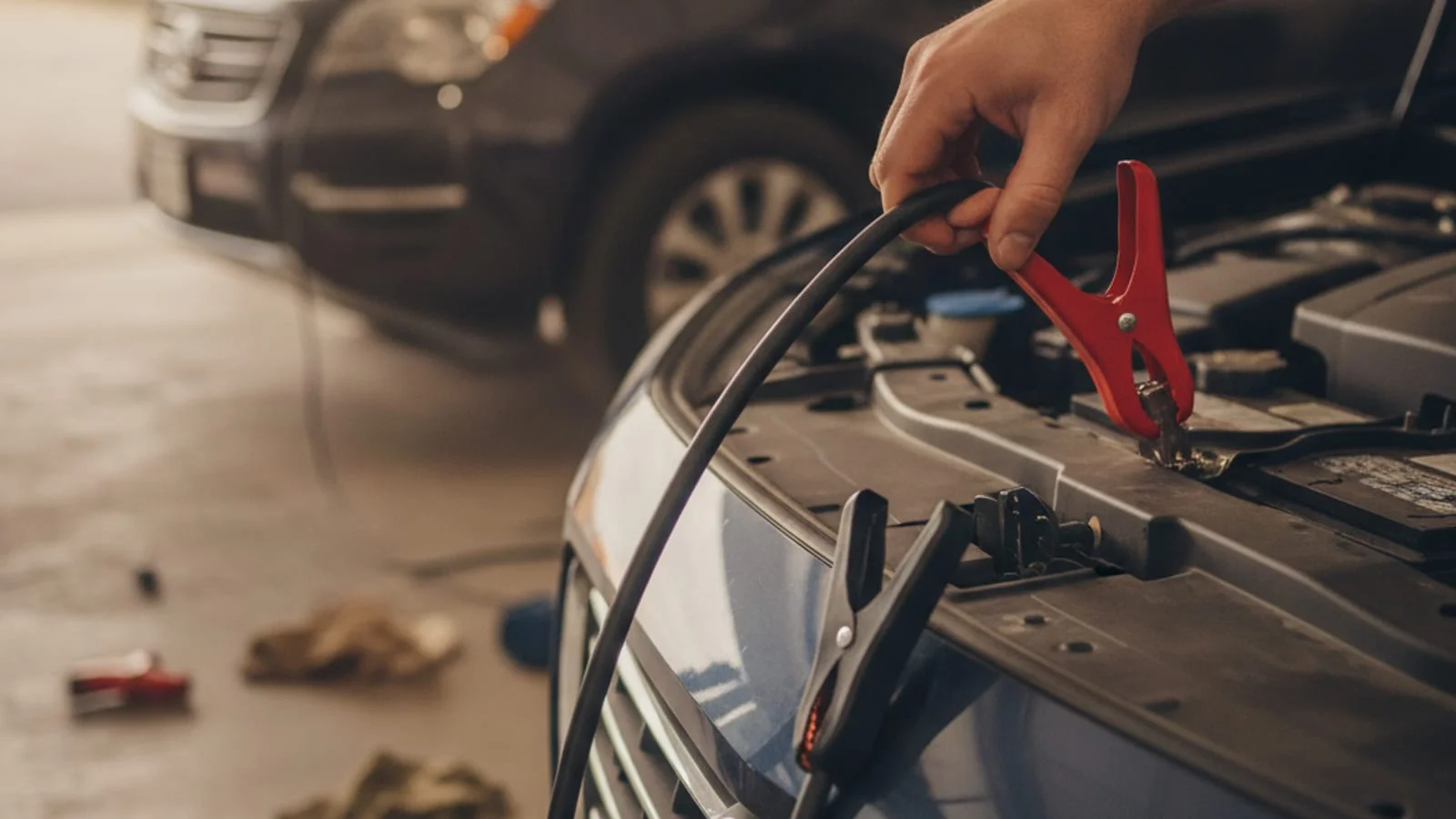
A weekend jump start makes sense when the car is accessible and appears safe to approach. If the vehicle was in a crash, has visible damage, or sits in a dangerous location, a jump may not be the right first step. Have a description of what you’re seeing ready, and we’ll match the situation with a local operator.
In Florida it is the heat that kills them, not the cold
Cold weather gets most of the attention in battery conversations. In Orlando, sustained heat is the bigger concern. Florida heat can shorten battery life without giving you an obvious warning.
That creates a familiar weekend scene. The car starts normally in the morning. It sits near International Drive, Lake Nona, or downtown Orlando. Later, the starter struggles or does nothing.
A jump start may get the engine running. It doesn’t explain why the battery lost its charge. The battery may be worn, or something may have drained it while parked. A loose or dirty connection can also produce similar symptoms.
Summer storms add another complication. You might spend time parked with lights, fans, or accessories running. That doesn’t prove the battery caused the problem. It does give the operator useful context.
Tell the operator if the car needed another jump recently. Mention any dim lights, warning indicators, or unusual sounds. Also share whether the battery looks swollen, cracked, or wet. Don’t handle a visibly damaged battery yourself.
Shade can reduce how hot the cabin feels. It doesn’t restore a weak battery. Likewise, letting the car sit doesn’t confirm that it will start later.
Once the engine runs, don’t assume the issue is settled. Consider getting the battery and charging system checked. That can help separate a discharged battery from another electrical problem before your next Orlando drive.
It might not be the battery at all
A no-start condition can look like a dead battery without being one. The starter, charging system, cable connections, or another electrical component may be involved. The sounds and dashboard behavior offer clues, but they don’t provide a final diagnosis.
Repeated clicking often makes drivers suspect the battery. Slow cranking does the same. However, neither symptom proves that a jump will solve the underlying problem.
Bright dashboard lights don’t rule out a battery issue. Complete silence doesn’t confirm one either. Tell the operator exactly what happens when you turn the key or press the start button.
Stop trying to start the car if you notice smoke, a burning smell, leaking fluid, or damaged wiring. A jump start isn’t the right experiment in those conditions. Keep people away from the engine area and describe the problem clearly.
The result of a properly attempted jump also matters. If the engine still won’t crank, another component may be responsible. If it starts but stops again, the car may need transport instead of another jump.
That decision can be especially important on the Turnpike, SR 417, or SR 429. Repeated roadside attempts can increase your exposure to passing traffic. Moving the car may be the more appropriate option.
Inside dispatch hours, Monday to Friday from 8 a.m. to 10 p.m., we can connect you with an operator who can attempt the jump. If the vehicle needs transport, our emergency towing service explains the next option. You leave the details on our line and we make the match. The operator handles the vehicle and decides what equipment the job requires.
The free option, and exactly what it covers
Florida’s Road Ranger patrol may be the first call for a highway breakdown. FHP Road Rangers provide free jump starts on covered roads. Dial *347 to request help.
Their services also include changing a tire with the vehicle’s own spare. They can provide up to 2 gallons of fuel, radiator water, and minor repairs taking less than 15 minutes. Road Rangers also clear lanes and move disabled vehicles from travel lanes.
They don’t tow your vehicle away. If a tow is required, FHP calls a private operator at the motorist’s expense. That distinction matters when a jump doesn’t get the car running.
Coverage and schedules vary by road segment. Near Orlando, Road Rangers cover SR 408 from mileposts 0 to 1 around the clock. Covered segments of SR 417, SR 429, and SR 570 operate from 6 a.m. to 10 p.m.
That schedule makes a weekend breakdown after 10 p.m. a different problem on those roads. The free patrol may not be operating on your segment then. Confirm your current road and available coverage before waiting.
You can also check FL511 for current Florida traffic and incident information. It can help you identify closures, congestion, and the road name near your location.
If Road Rangers don’t cover your location and it is a weekday between 8 a.m. and 10 p.m., call our line. We can connect you with a local operator through our roadside assistance service. The operator we connect you with performs the jump start and is responsible for capability, timing, price, and terms. If the car can’t be started, you can discuss towing with that operator before the vehicle is moved.
Weekend jump start service: what to have ready
Clear information helps the operator understand the job before reaching your car. Start with the exact location. A map pin is useful, but add details a driver can see.
On a highway, share the road, direction, nearest exit, and shoulder. “I-4 eastbound near SR 408” is much clearer than “somewhere downtown.” On private property, give the business name, garage level, row, or nearest entrance.
Have these details ready:
- The vehicle’s year, make, and model
- Whether it’s gasoline, diesel, hybrid, or electric
- What happens when you try starting it
- Any clicking, dim lights, warnings, smoke, or odors
- Whether the hood and battery area are accessible
- Whether another vehicle blocks access
- Whether the car is in traffic or safely parked
Mention any recent jump attempts. Tell the operator if cables were connected but the engine still didn’t crank. Don’t repeat the process if the battery appears cracked, swollen, or leaking.
Keep your keys and phone with you. If you’re in a paid garage or gated lot, be ready to explain the entry process. The operator may need clearance information before entering the property.
Move loose items away from the hood release and battery area when that’s safe. You don’t need to remove battery covers or electrical panels. Let the operator inspect the setup before connecting equipment.
Also consider what happens if the jump fails. Know where you’d want the vehicle taken, if possible. You don’t need a final destination before calling, but thinking ahead can reduce confusion beside a busy road.
The goal is a clear handoff. Have your location, what the car is doing, and whether the scene is safe ready before you dial. We’ll use that information to connect you with an appropriate local operator.
When to call us, and when not to
Call us Monday to Friday between 8 a.m. and 10 p.m. when you don’t have safe equipment, roadside attempts have failed, or the vehicle may need towing. We connect you with a local operator for roadside help or transport. Call (321) 321-9797.
On a Saturday or Sunday, or after 10 p.m., our dispatch is closed. If the car is parked somewhere safe, leave a message on the same number and dispatch calls you back when it opens. If you are on a shoulder, in a travel lane, or anywhere you feel exposed, do not wait on a callback: dial *347 for Road Rangers on a covered segment, or 911 if you are in danger.