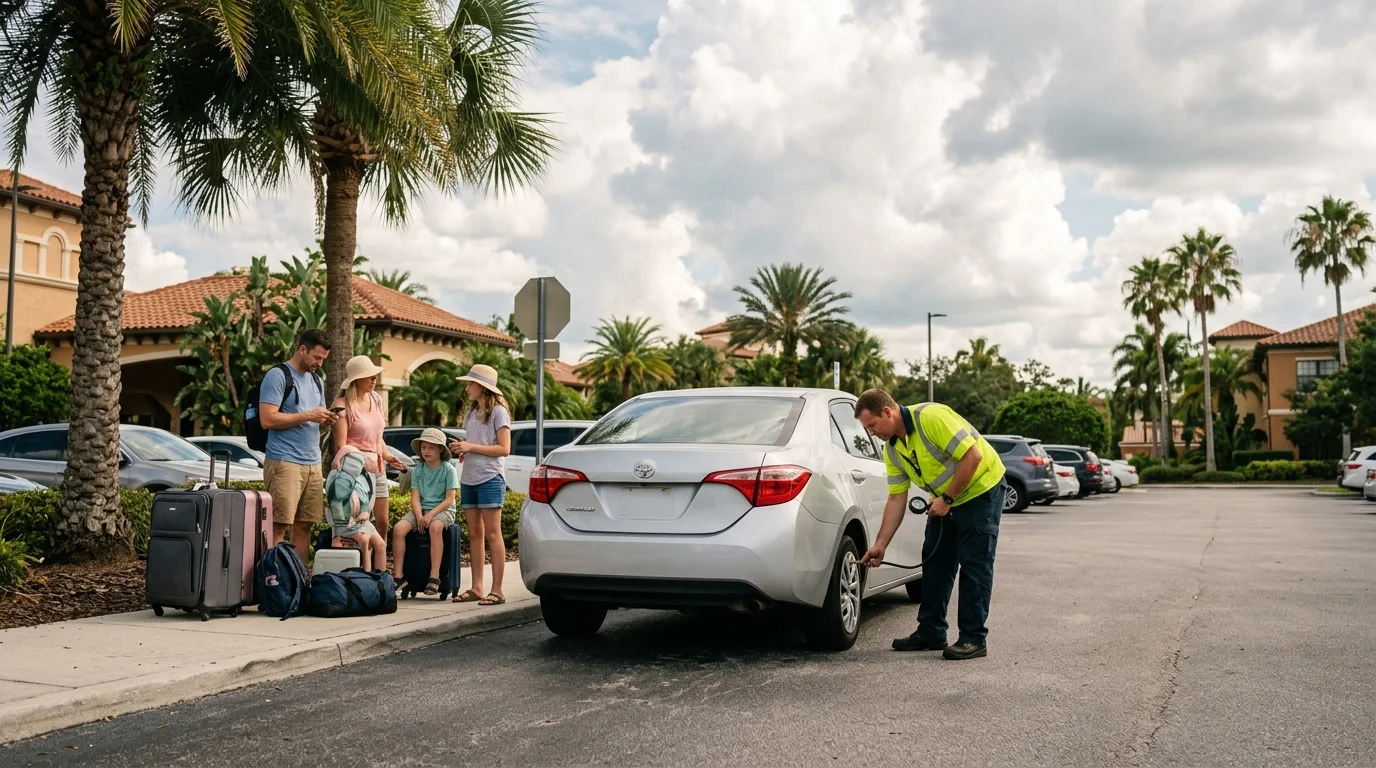
A rental car breakdown in Orlando can disrupt an entire vacation day. First, get away from moving traffic when possible. Then contact the rental company before approving repairs or a tow.
The right destination may depend on your rental agreement. Confirm those instructions before an operator moves the car.
Move out of the tourist traffic first
International Drive, Lake Buena Vista, Celebration, and the resort districts stay busy. A disabled car near an entrance can leave you exposed to turning traffic. Your first decision should focus on the people, not the vehicle.
If the car still moves safely, look for a parking lot or marked space. Don’t continue driving if steering, braking, smoke, or another serious concern appears. Turn on the hazard lights after stopping.
On an SR 417 or I-4 shoulder, assess the traffic around you. Don’t step into an active lane to inspect damage. Move passengers away from traffic when there’s a safe path. If leaving the car would place anyone closer to passing vehicles, remain where you’re protected and seek emergency help.
Our guide to breaking down on I-4 covers that specific roadside situation.
Once everyone is safe, record the location carefully. Orlando visitors often know the attraction but not the road or entrance. Gather details such as:
- The road name and direction of travel
- The nearest exit, intersection, or recognizable entrance
- The resort, garage, or parking area name
- The parking level, row, or space marker
- The rental car’s color, make, model, and license plate
- Whether the vehicle blocks traffic
- Whether a gate or parking attendant controls access
Drop a location pin if your phone allows it. Check the pin against visible signs before sharing it. A resort may have several entrances, and the wrong one can complicate access.
Don’t diagnose the failure unless you know the cause. Describe what happened instead. Mention a flat tire, warning light, smoke, clicking sound, stalled engine, or lost electrical power. Those observations help the rental company and roadside operator plan the next step.
Call the rental company before authorizing a tow
Contact the rental company once the immediate danger has passed. Use the contact method printed in your agreement, key sleeve, receipt, or rental app. That keeps the request tied to the correct reservation.
Tell the representative where the car stopped and what it did. Explain whether it can roll, steer, or start. Mention passengers, luggage, mobility needs, and child seats. Also report any collision or visible vehicle damage without guessing about the cause.
Ask direct questions before accepting outside service:
- Has the company opened a roadside assistance case?
- May you arrange an independent roadside operator?
- Does the company require a specific towing provider?
- Where should the car be taken?
- Is the destination ready to receive it?
- What records should you keep?
- How will replacement transportation be handled?
Write down the instructions and any case number provided. Save screenshots of app messages or written directions. Don’t assume the rental company will repay a charge unless it confirms that point under your agreement.
Some problems may only require roadside assistance. A dead battery, lockout, or tire issue doesn’t automatically mean the car needs transport. The rental company may still have instructions about who can work on its vehicle.
If the vehicle can’t remain safely where it stopped, explain that clearly. You can also contact emergency towing assistance after receiving the rental company’s direction. Quick Tow Orlando connects callers with independent local towing and roadside operators. It doesn’t own the rental car or decide what its contract permits.
Know what information the rental agreement may control
Rental agreements aren’t all the same. Don’t rely on what happened during an earlier trip or with another company. Read the roadside assistance, breakdown, damage, and towing sections of your current agreement.
The agreement may address questions such as who can authorize a tow. It may also identify a required destination or contact process. If the wording isn’t clear, ask the rental company to explain its instructions.
Look for details concerning:
- Roadside assistance enrollment
- Authorized drivers
- Mechanical breakdown reporting
- Towing approval
- Repairs or replacement parts
- Vehicle exchanges
- Damage documentation
- Insurance or optional coverage
- Receipts and reimbursement requests
These topics don’t guarantee any particular result. They simply show what needs confirmation. A rental company representative should interpret the reservation and agreement, not the tow operator.
Don’t authorize repairs because someone says the problem looks simple. A battery replacement, tire repair, or mechanical inspection may need approval. Ask whether the company wants roadside work attempted or wants the car transported.
Insurance can add another layer. Personal auto policies, credit card benefits, travel coverage, and rental products may treat towing differently. Coverage also depends on the policy language and the incident. Our guide to whether car insurance covers towing in Florida explains what to check without promising coverage.
Keep the rental agreement available during every call. Have the renter’s name, reservation details, vehicle information, and current location ready. Share only the information requested through a contact method you trust.
If the rental company gives verbal instructions, repeat them back. Confirm the destination, authorization, and next contact. Clear notes can prevent confusion once the vehicle leaves your location.
Handle passengers, luggage, and child seats
The rental car and your traveling party may need separate plans. Don’t assume every passenger and suitcase can travel with the tow operator. Ask before the vehicle is loaded.
Start with children, older travelers, and anyone with medical or mobility needs. Find a protected waiting area when one is available. At a resort or garage, tell onsite staff that a rental car has broken down. Ask about safe waiting locations, gate access, and pickup instructions.
Keep important items with you:
- Identification and travel documents
- Medication and medical equipment
- Phones, chargers, and power banks
- Wallets, keys, and reservation records
- Child seats and necessary child supplies
- Luggage needed before the vehicle is returned
- Rental paperwork and roadside case details
Check the cabin, trunk, door pockets, and console before transport. Don’t leave passports, medication, electronics, or hotel keys inside. If you can’t remove something safely, tell the rental company and operator.
Arrange passenger transportation separately when needed. Confirm where each person is going before the tow begins. A group returning to an International Drive hotel may need a different pickup than a family continuing toward Lake Buena Vista.
Child seats deserve extra attention. Keep them with your group if they’ll be needed in another vehicle. Don’t leave one installed unless the rental company has told you what will happen to the car and its contents.
Take clear photos of the vehicle’s condition and location when it’s safe. Photograph visible damage, the fuel gauge, mileage display, and belongings left inside. These records don’t determine responsibility. They preserve what you observed before the vehicle moved.
Confirm where the rental car should go
A rental car shouldn’t be sent to a guessed destination. Ask the rental company for the complete address and the receiving contact or department. A branch, service location, repair facility, or storage site may serve different purposes.
Read the address back to the representative. Orlando-area roads and resort entrances can have similar names. A location pin alone may lead to a guest entrance instead of the vehicle entrance.
Before transport begins, confirm:
- The exact destination
- Who authorized that destination
- Whether someone expects the vehicle
- Any gate, garage, or clearance restrictions
- Where the keys should go
- What paperwork should travel with the car
- Whether you must meet the vehicle there
- What happens to luggage left inside
Give the same destination information to the roadside operator. Don’t ask the operator to choose based only on distance. The nearest shop or rental counter may not be the location approved for your reservation.
Also tell the operator about the vehicle itself. Mention all-wheel drive if the agreement or vehicle markings identify it. Report damaged wheels, locked steering, low clearance, an electric parking brake, or a parking garage. Don’t guess about loading methods. The operator can evaluate the vehicle and access conditions.
If the car is inside resort parking, identify the correct garage level and entrance. Note any ticket gate or overhead clearance sign. Ask onsite staff where service vehicles should enter. Don’t move cones, cross restricted areas, or block a resort loading lane.
Before the car leaves, confirm what document you’ll receive from the operator. Keep any tow record with the rental company’s case information. Don’t sign a form you haven’t read or approve a different destination without contacting the rental company again.
When to call us
Call when the rental company authorizes roadside help or towing, or when the vehicle can’t remain safely where it stopped. The Quick Tow Orlando line takes calls at any hour, dispatches Monday to Friday from 8 a.m. to 10 p.m., and connects drivers with independent operators across the Orlando Metro. Call us at (321) 321-9797.